The Moment Everything Changed
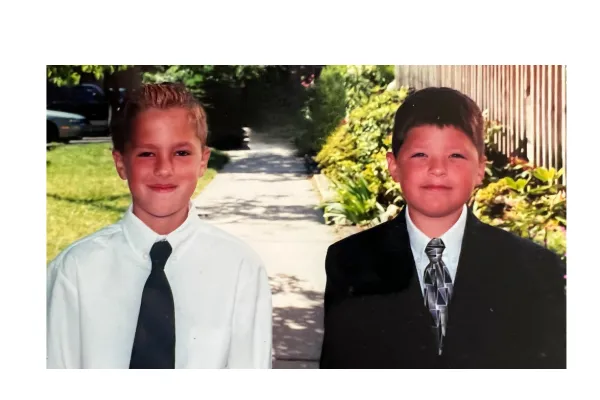
I am a wife and mom of four. Two are twins — Joey and Eddie.
Joey was always the cautious one. Eddie wrote his own rules. A free spirit with a wide-open heart — generous, creative, always going somewhere new. He became a fixed gear bicycle rider and bike messenger who traveled the world. Eddie and Joey were close, even though they were opposites.
Eddie started using drugs around 18. He was hurt a lot on his bike — surgeries followed, and with them, opioids. Somewhere along the way, addiction took over his life. That was about ten years ago.
I tried everything I knew to try. We believed he'd get through it — because that's what we believed about Eddie.
When the hospital called saying he needed us, I showed up, as I always did. It was serious. I was powerless.
One day I walked into his room and said, "Hi, Ed."
He looked at me — we had masks on — and said, "Who are you?"
I pulled my mask down.
"Who am I?"
He said, "You're my mom."
He smiled — content, like something had settled.
The nephrologist told him he had calciphylaxis and recommended hospice. Robert asked, "Do you understand what he's saying?"
Eddie said, "Yeah, I do. It's like pissing in the wind."
I knew then — he knew he was going to die.
He had just spent his 35th birthday in the hospital. None of us knew it would be his last.
They said his body might last a week and a half.
It was twelve hours.
We came in at seven that morning. He'd had a good night.
Then his breathing got worse — and then it calmed down. I stepped out to make a phone call, but something pulled me back.
When I walked back in, Robert had Joey on speakerphone. Joey wanted Eddie to know he loved him. Robert held the phone up and said it out loud:
"Joey loves you. Joey loves you."
So Eddie would know his brother was with him.
In that same moment, I looked at Eddie.
And he took his last breath.
When Eddie died, hope died with him.
There was no more hope that he'd recover.
No more hope that he'd come home.
The weight of that felt unbearable. It felt like I was dragging 500 pounds across my chest and behind me everywhere I went.
I needed something. Anything. To make me feel better.
Days later, alone in my car, I screamed.
My throat hurt for two days after.
I was in a haze. I only caught the last few words of what people were saying to me.
I met with Julie, a psychologist. She didn't try to fix anything. She just listened.
Somewhere in there, she mentioned finding meaning in grief.
That stuck with me.
I got curious.
I signed up for a retreat. Not even a grief retreat — just a retreat.
I went hoping to feel better. But surrounded by people who weren't grieving, my grief got louder.
The host noticed.
She suggested I go to a grief retreat instead.
For the first time, I felt seen.
I felt heard.
Julie also suggested FA bereavement meetings for parents who had lost a child to addiction.
I remember how uncomfortable that felt at first.
But those people understood.
And eventually, I understood too.
Grief wasn't something to survive.
It was something to understand.
I became a grief educator.
I went back to that same retreat — this time to teach grief movement.
That's when it hit me.
I already own a retreat.
My own bed and breakfast.
Why couldn't I create that same kind of space for other people?
That's when I decided I wanted to hold grief retreats there too.
Not because I have the answers.
Not because grief has a formula.
But because I know what it's like to need a place where you feel understood.
I believe the pain we carry isn't our enemy.
It's proof of how much we loved.
Understanding grief doesn't take aIf way that love.
It changes how you carry it.
If you're grieving and nothing seems to be working, and you don't know why, I get it.
I've been there.
And I'd be honored to walk with you.
If you want a simple practice for the moments grief feels too big, I made this free-
